
What we do
Oral Bible Translation
Scripture prepared, recorded and shared in spoken form, for communities where listening is the primary way knowledge is received and passed on.
Understanding the work
What oral Bible translation means
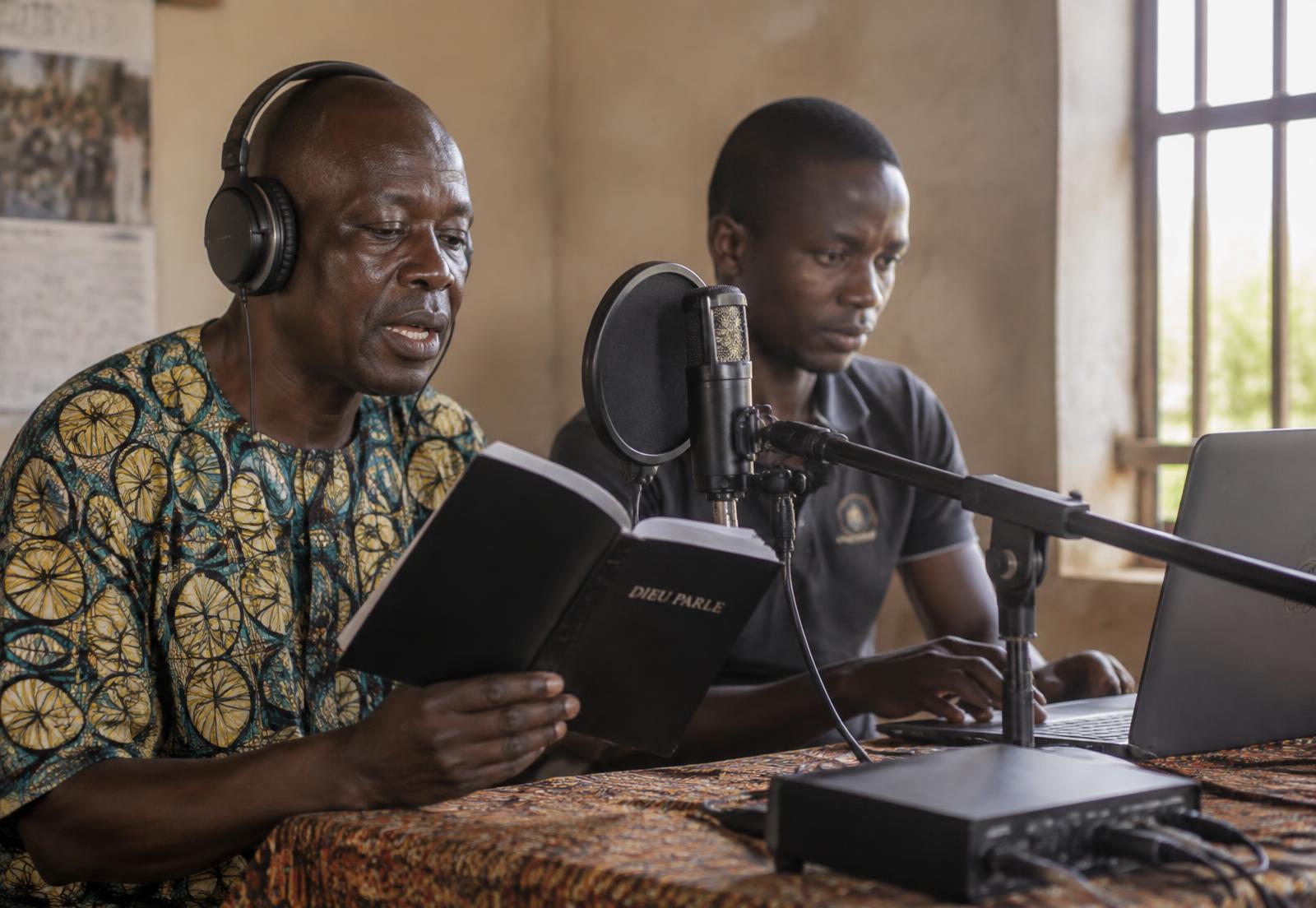
Oral Bible translation produces Scripture in spoken form. Instead of moving from one written text to another, trained local translators work from source Scripture into carefully checked spoken language, which is then recorded, reviewed and released as audio.
Why oral Scripture matters
Many communities share knowledge, history and faith through speech, story and song. Where literacy in the local language is limited, or where no written translation exists, oral Scripture allows people to engage with God's Word directly rather than through a second language.
Why heart-language communication matters
A heart language is the language in which a person thinks, prays and grieves. Scripture in that language is understood rather than merely heard, and it can be repeated, discussed and taught within the community.
How communities participate
- Community leaders invite the work and help set its direction.
- Local speakers translate, review and record Scripture.
- Community members test passages for clarity, accuracy and naturalness.
- Local churches receive the recordings and use them in teaching and discipleship.
How Scripture is recorded
Recording takes place with local speakers using portable equipment, often in the community itself. Passages are recorded in natural oral style, then checked for accuracy and audio quality before release.
How resources are tested
Community review sessions check meaning and tone. Exegetical checking confirms faithfulness to the source text before any recording is published.
How materials are distributed
Audio Scripture is shared through memory cards, audio players, phones and church gatherings — whichever channels the community already uses.
Translation workflow
How a translation project works
Eight stages, carried out with the community from beginning to end.
- 01
Community Engagement
Invitation, listening and shared agreement on the work ahead.
- 02
Language Research
Understanding dialects, oral forms and communication patterns.
- 03
Scripture Translation
Drafting Scripture with trained local translators.
- 04
Community Review
Community members check meaning, tone and naturalness.
- 05
Recording
Local speakers record Scripture in appropriate oral styles.
- 06
Quality Assurance
Exegetical and technical checking before release.
- 07
Distribution
Audio, print and digital delivery suited to the community.
- 08
Discipleship
Local churches and leaders apply Scripture in ministry.
Audio demonstration
Listen to Scripture and language samples
Recordings, language samples, interviews and testimonies published by the ministry.
Loading recordings…
Support translation